The jobs market had a good Labor Day present for America.
2026-09-04The US added 162,000 jobs in August, according to the Bureau of Labor Statistics' monthly jobs report, far more than the 55,000 jobs economists expected. Unemployment held steady at 4.1%, as expected.
Check out our biggest insights from the report below.
Here's what workplace observers are saying about the strong report
After a concerning July jobs report, August's report should bring some relief. July's net loss was revised to a gain, and the US added about three times the expected number of jobs in August. Most major industries experienced growth, including leisure and hospitality and government.
Unemployment was unchanged at the low rate of 4.1%, and labor force participation ticked up.
After a concerning July jobs report, August's report should bring some relief. July's net loss was revised to a gain, and the US added about three times the expected number of jobs in August. Most major industries experienced growth, including leisure and hospitality and government.
Unemployment was unchanged at the low rate of 4.1%, and labor force participation ticked up.
Here's how workplace observers reacted:
- Ger Doyle, regional president of North America at ManpowerGroup: "Today's report is stronger than expected, although a single month does not establish a broader change in direction. The composition of hiring is especially important now because employer investment is producing demand across some parts of the economy while hiring remains restrained in others."
- Ryan Weldon, investment director and portfolio manager at IFM Investors: "The August employment print showed a massive rebound from the negative July print and a positive net revision, underscoring the strength in the US jobs market. This print will keep all of the focus from the Fed and the market on next week's inflation print and will likely give the Fed more room to hike rates."
- Jerry Tempelman, former senior analyst at the NY Fed and vice president of economic and fixed income research at Mutual of America Capital Management: "With the unemployment rate holding steady at 4.1%, today's data may corroborate that recent softness was temporary rather than indicative of a broader deterioration. Solid job creation, particularly in healthcare and private sector employment, supports the idea that the demand for labor is accommodating the stagnating supply."
Bond yields rise and stocks waver after blowout August jobs data
US Treasury yields rose after the August jobs report as investors recalibrated expectations for rates following a week of whipsawing expectations for this month's Fed meeting.
The 10-year Treasury yield was up 2 basis points to 4.78%, paring slightly after topping 4.8% right after the report. The policy-sensitive 2-year bond rose 5 basis points to 4.38%. Stock futures wavered after the report and were pointing mostly lower ahead of the opening bell.
US Treasury yields rose after the August jobs report as investors recalibrated expectations for rates following a week of whipsawing expectations for this month's Fed meeting.
The 10-year Treasury yield was up 2 basis points to 4.78%, paring slightly after topping 4.8% right after the report. The policy-sensitive 2-year bond rose 5 basis points to 4.38%. Stock futures wavered after the report and were pointing mostly lower ahead of the opening bell.
The rise in bond yields follows an opposite move on Thursday after a top Fed official said he'd support holding rates steady this month.
Year-over-year wage growth slightly cooled
Average hourly earnings increased 0.3% over the month, up from the previous 0.2% increase. Earnings rose 3.1% from a year ago in August, below the previous 3.2%.
We will see how that compares to inflation when the Bureau of Labor Statistics releases the consumer price index report next Friday.
Plenty of jobs across industries
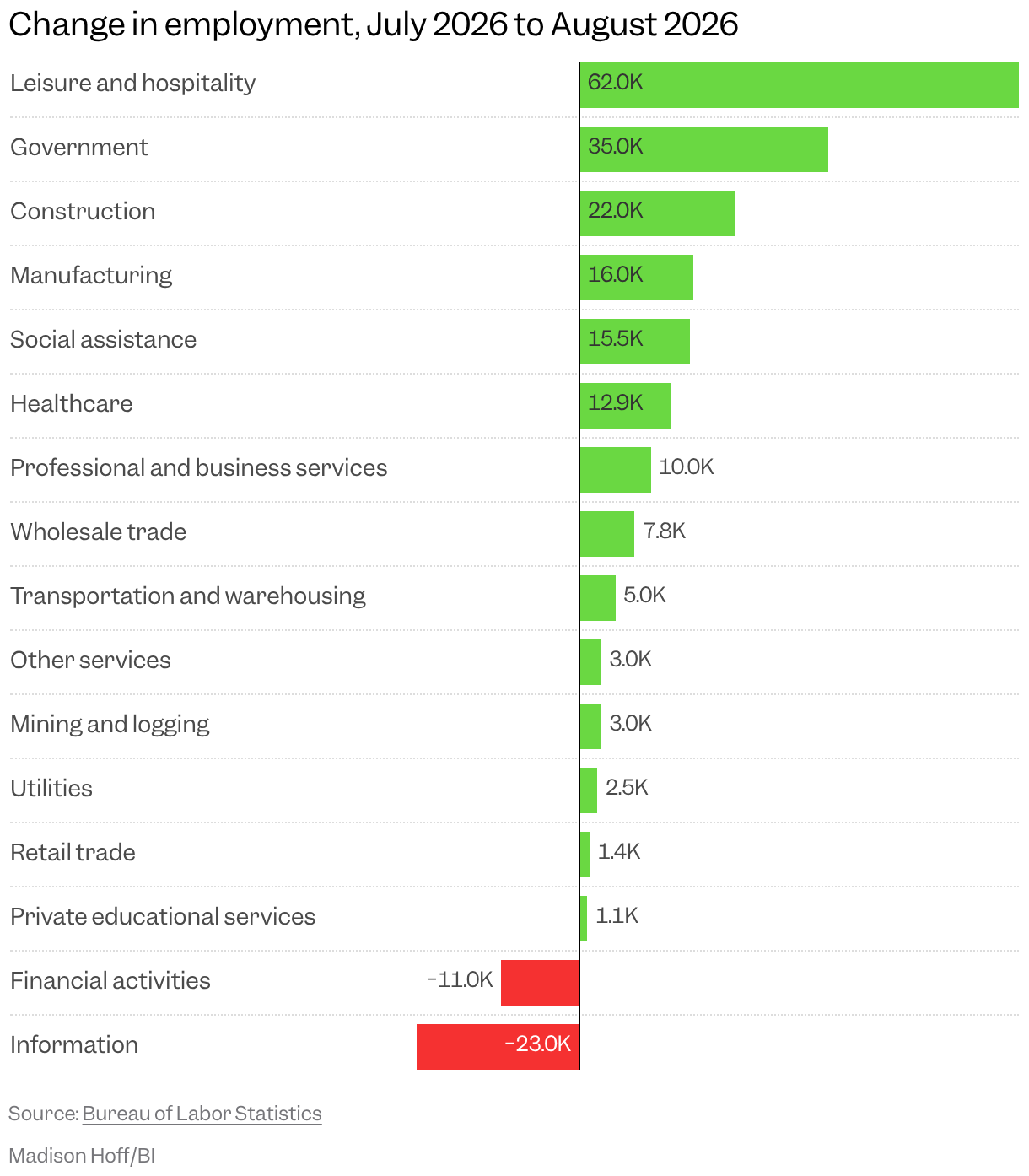
Only two major industries experienced job loss over the month: the information and financial activities sectors. Leisure and hospitality, powered by a big uptick in accommodation and food services, led the way for job growth after falling in July.
Labor force participation ticked back up
Labor force participation picked up in August, from 61.4% to 61.6%, while unemployment remained steady and low. In July, labor force participation fell alongside unemployment.
Labor force participation had generally been declining, reaching the lowest rate since 1976 in July, excluding the chaotic labor market in the early COVID-19 pandemic.
July's shocking loss was revised to a gain
BLS revised July's decline of 23,000 to a gain of 21,000 and revised June's gain of 20,000 to 31,000. That means there were 55,000 more jobs added over those two months than previously estimated.
The US added way more jobs than expected
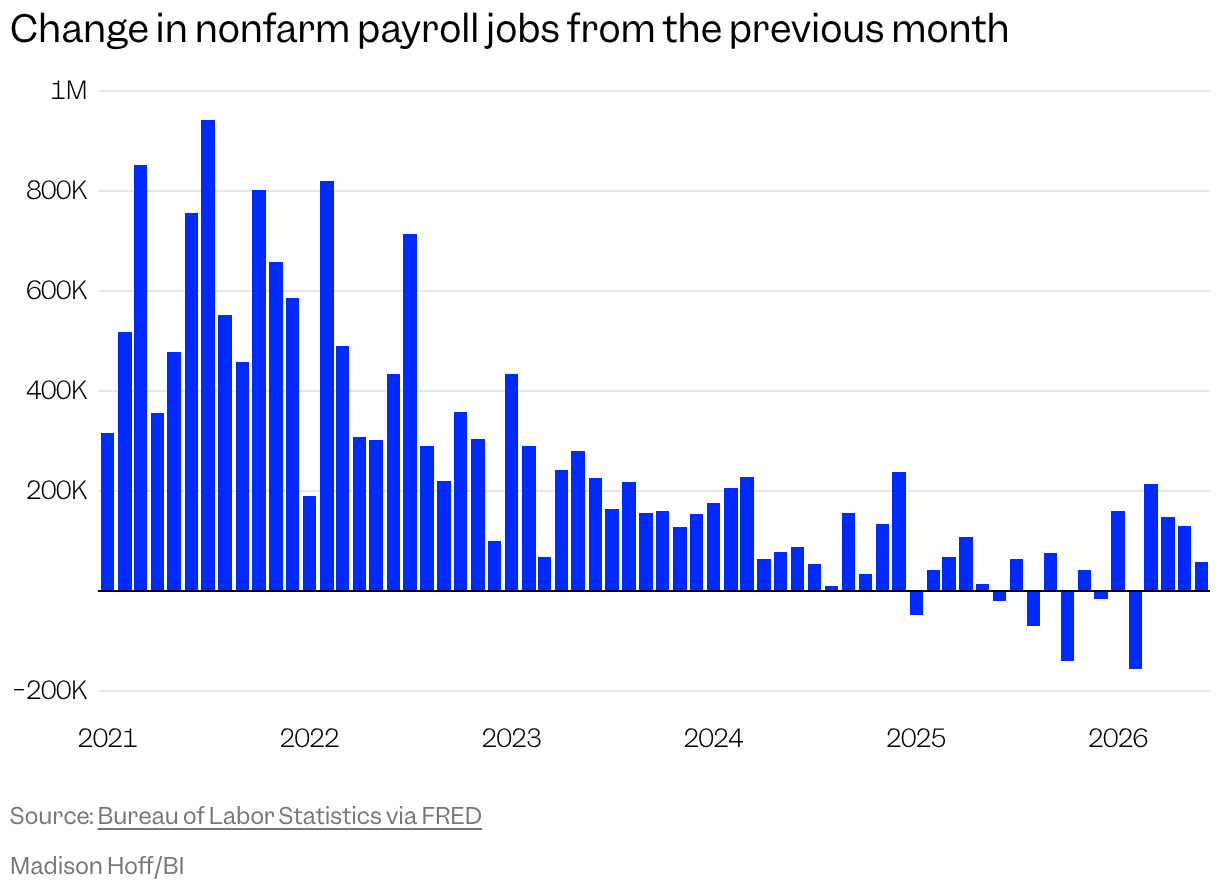
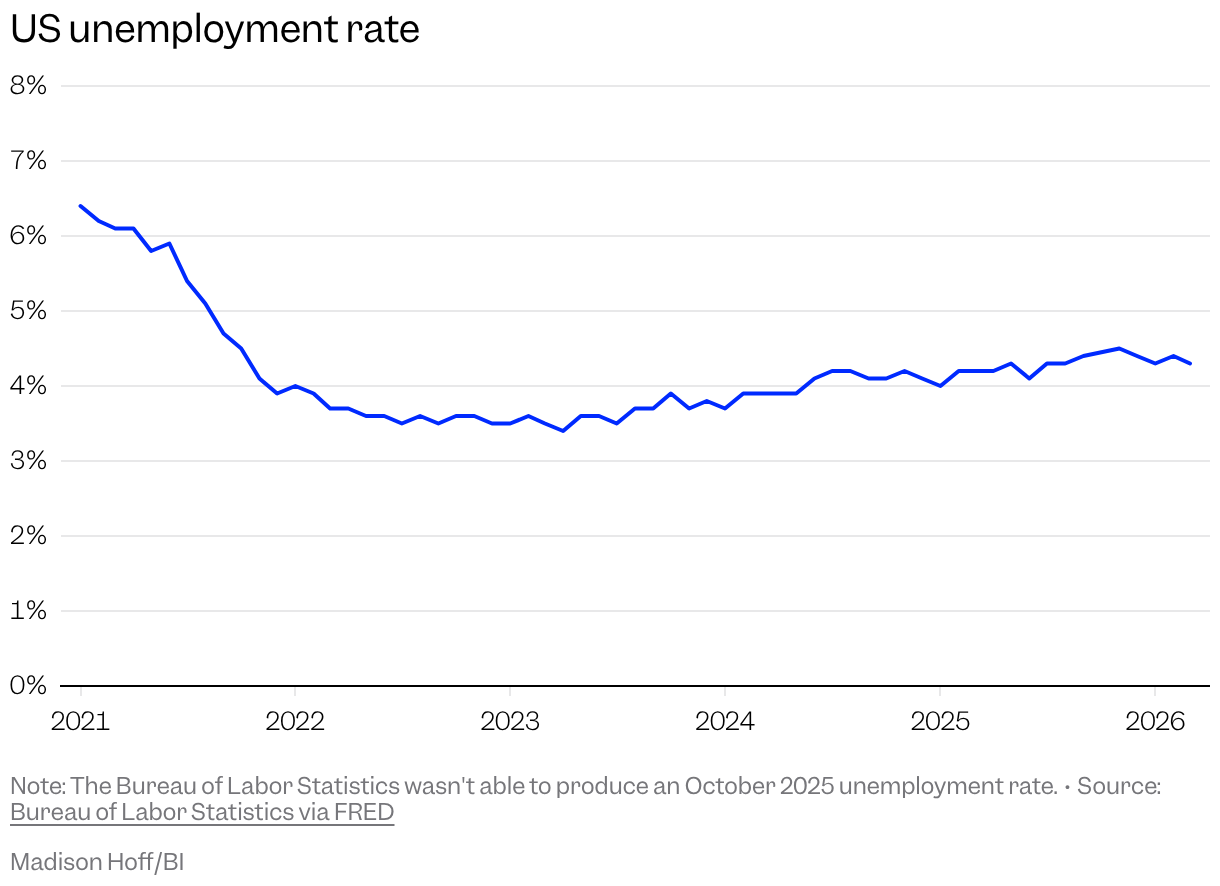
The US added 162,000 jobs, far above the 55,000 gain expected. Unemployment held steady at 4.1%, and labor force participation rose from 61.4% to 61.6% after it had cooled.
What economists expect to happen
Daniel Zhao, chief economist at Glassdoor, told Business Insider that outside the surprise negative read in last's report, the job market is slowly expanding. He said the outlook for labor force participation, which has been cooling, is in question.
"To some extent, when the data surprises in one direction, sometimes you expect it to snap back as those data issues pass, but that's not a guarantee," Zhao said. "And so I think that's an area to watch to see if the labor force participation rate continues falling."
Daniel Zhao, chief economist at Glassdoor, told Business Insider that outside the surprise negative read in last's report, the job market is slowly expanding. He said the outlook for labor force participation, which has been cooling, is in question.
"To some extent, when the data surprises in one direction, sometimes you expect it to snap back as those data issues pass, but that's not a guarantee," Zhao said. "And so I think that's an area to watch to see if the labor force participation rate continues falling."
EY economists Gregory Daco and Lydia Boussour said in commentary that they expect the US added 35,000 jobs last month. "Some normalization in state and local education employment following an unusually large seasonal plunge, along with a modest rebound in leisure and hospitality, should support payrolls," they said. "But those gains will likely be offset by job losses tied to the termination of Temporary Protected Status (TPS) for Haitian workers."
Looking at the future
Recently published job projections can give insight into which kinds of work may be in demand. Nurse practitioners are projected to grow the fastest between 2025 and 2035, rising 41%, partly because they can help perform duties that physicians can. Solar photovoltaic installers follow behind at 36.5%.
What other reports show about the job market
Based on ADP's private payrolls, employers added 38,000 jobs last month, the lowest gain since January. Job growth and losses were mixed at the industry level. Professional and business services; trade, transportation, and utilities; and manufacturing were among the industries that lost jobs. Financial activities and construction were among those that added jobs.
A report from Gusto, a payroll and benefits platform that serves small- and medium-sized businesses, can tell us how the mom-and-pop side of the economy is faring. Small-business employers added 29,500 jobs, cooler than in other months in 2026, except for January's net loss.
Based on ADP's private payrolls, employers added 38,000 jobs last month, the lowest gain since January. Job growth and losses were mixed at the industry level. Professional and business services; trade, transportation, and utilities; and manufacturing were among the industries that lost jobs. Financial activities and construction were among those that added jobs.
A report from Gusto, a payroll and benefits platform that serves small- and medium-sized businesses, can tell us how the mom-and-pop side of the economy is faring. Small-business employers added 29,500 jobs, cooler than in other months in 2026, except for January's net loss.
"Average hourly earnings were up 3.9% year over year and starting pay for new hires up 3.2% — so August's slowdown looks like fewer new positions, not softer wages," the report said.
It's almost time for another Fed meeting
The Federal Open Market Committee will meet on September 15 and 16, and members can use the new job report and next week's consumer price index report to help inform their interest rate decision.
The Fed has been holding rates steady, but CME FedWatch, which shows the chances of Fed moves based on interest-rate traders, showed it's a toss-up between a rate hike and no change this month.
The Federal Open Market Committee will meet on September 15 and 16, and members can use the new job report and next week's consumer price index report to help inform their interest rate decision.
The Fed has been holding rates steady, but CME FedWatch, which shows the chances of Fed moves based on interest-rate traders, showed it's a toss-up between a rate hike and no change this month.
Fed chair Kevin Warsh said in his August speech at Jackson Hole, Wyoming, that "the Fed's predominant focus right now should be on prices." He said the job market is looking stable with low unemployment, while inflation is above the Fed's 2% target.
JPMorgan warns a strong jobs report could worsen the bond sell-off
Strategists on JPMorgan's markets intelligence team said Treasury yields could move higher if the jobs report is on the "stronger" side. That's because markets are in a "Good News is Bad News" regime — a dynamic where strong economic data causes investors to price in higher interest rates, leading risk-assets to tumble and bond yields to rise.
At the same time, a huge miss in job numbers could fuel concerns about stagflation, a scenario in which inflation stays stubbornly high while growth remains sluggish, the strategists said.
Strategists on JPMorgan's markets intelligence team said Treasury yields could move higher if the jobs report is on the "stronger" side. That's because markets are in a "Good News is Bad News" regime — a dynamic where strong economic data causes investors to price in higher interest rates, leading risk-assets to tumble and bond yields to rise.
At the same time, a huge miss in job numbers could fuel concerns about stagflation, a scenario in which inflation stays stubbornly high while growth remains sluggish, the strategists said.
The bank outlined the market's possible reactions depending on the coming job numbers:
- More than 95,000 job gains: S&P 500 falls 0.5%-1.35% (10% probability)
- 65,000-95,000 job gains: S&P 500 falls 0.25%-0.5% (25% probability)
- 35,000-65,000 job gains: S&P 500 falls as much as 0.25% or gains as much as 0.5% (30% probability)
- 5,000-35,000 job gains: S&P 500 rises 0.25%-0.75% (25% probability)
- Below 5,000 job gains: S&P 500 loses 0.25% or gains 0.5% (10% probability)
Job seekers are facing a tricky market
Svenja Gudell, the chief economist at Indeed, said if you're a recent grad looking for work in finance, it can be tough to land your first job. Entry-level workers in general may be finding it hard to get noticed by employers; Gudell said there seems to be a higher demand for senior-level roles.
Developing AI skills could give job seekers an edge.
Svenja Gudell, the chief economist at Indeed, said if you're a recent grad looking for work in finance, it can be tough to land your first job. Entry-level workers in general may be finding it hard to get noticed by employers; Gudell said there seems to be a higher demand for senior-level roles.
Developing AI skills could give job seekers an edge.
"If you can work with AI tools successfully, even if you actually can help program AI tools — I mean, we're seeing a lot of wage premiums and a lot of demand for those people," Gudell said.
While healthcare has been a job-growth engine, aspiring nurses may be having a hard time finding work. Gudell said a subsection of nurses is seeing demand.
She recommends that job seekers be clear about their skills and experience and avoid marketing speak in job application materials, especially at a time when résumés are starting to sound similar with the help of AI tools.
Americans are raising the bar on desired pay
The New York Fed has tracked the average lowest pay that Americans say they would accept if offered a job using its survey of consumer expectations since March 2014. This minimum wage reached the highest level in July, at $88,387.
"It's a relatively weak market. It's harder to come by an offer," Chris Martin, senior economist at Glassdoor, told Business Insider's Juliana Kaplan. "And so the amount that I need to be paid or that I expect from a new role is higher than it would be otherwise."
Labor force participation is being pushed down by retiring boomers
Prime-age labor force participation inched up to 83.4% in July, while overall labor force participation has been cooling, reaching its lowest in decades, excluding the pandemic. Lower immigration and aging are two factors.
"There's an immediate shock that's happening right now as baby boomers have been retiring for a while now," Svenja Gudell, the chief economist at Indeed, said. "We're in the middle of that generation leaving the workforce. We'll continue to see that."
Prime-age labor force participation inched up to 83.4% in July, while overall labor force participation has been cooling, reaching its lowest in decades, excluding the pandemic. Lower immigration and aging are two factors.
"There's an immediate shock that's happening right now as baby boomers have been retiring for a while now," Svenja Gudell, the chief economist at Indeed, said. "We're in the middle of that generation leaving the workforce. We'll continue to see that."
Both men's and women's labor force participation rates are down from pre-pandemic estimates. "Some of that I think has to do with a step back in flexible work," Gudell said. "It's just for a lot of women, it is still incredibly difficult to carry oftentimes the large load of taking care of small kids at home and working."
The low-hire, low-fire job market
The Bureau of Labor Statistics published turnover data on Tuesday, which showed the stagnant job market continues, as seen by low quit and layoff rates. The hiring rate of 3.2% is comparable to that of the early 2010s.
Hiring in the professional and business services sector fell sharply, from 4.8% in June to 4% in July. Layoffs and discharges fell sharply in the information sector, from 2% to 1.4%.
The Bureau of Labor Statistics published turnover data on Tuesday, which showed the stagnant job market continues, as seen by low quit and layoff rates. The hiring rate of 3.2% is comparable to that of the early 2010s.
Hiring in the professional and business services sector fell sharply, from 4.8% in June to 4% in July. Layoffs and discharges fell sharply in the information sector, from 2% to 1.4%.
"This low level of churn that we're seeing is unhealthy in some sense because it means that there are fewer opportunities for workers to leave a job that doesn't fit them and find a better one that does," said Daniel Zhao, chief economist at Glassdoor.
"Even though there might be some security in the fact that layoffs are low, many workers feel stuck in their current position."
Inflation outpaces wage growth
Wage growth hasn't kept up with price growth for four consecutive months, although the gap in July was much lower than in its recent peak in May. The consumer price index increased 3.4% in July from a year ago, above the year-over-year growth in average hourly earnings of 3.2%. In May, the inflation rate was 4.2%, more than wage growth of 3.3%.
Elevated inflation has been partly fueled by the Iran war's effects on oil. Energy prices rose 14.7% year over year. On the other side, wage growth has cooled from 2025 rates.
Wage growth hasn't kept up with price growth for four consecutive months, although the gap in July was much lower than in its recent peak in May. The consumer price index increased 3.4% in July from a year ago, above the year-over-year growth in average hourly earnings of 3.2%. In May, the inflation rate was 4.2%, more than wage growth of 3.3%.
Elevated inflation has been partly fueled by the Iran war's effects on oil. Energy prices rose 14.7% year over year. On the other side, wage growth has cooled from 2025 rates.
"We're seeing people's budgets being impacted in real time as inflation remains elevated," ZipRecruiter economist Nicole Bachaud said.
The state of the markets on jobs day
As is often the case ahead of major economic data releases, US stock futures are looking placid on Friday as investors await jobs data and prepare for the holiday weekend.
Just before 6:45 a.m. ET, futures for the Dow Jones Industrial Average were 0.14% down at 53,613, while the S&P 500 was set to gain 0.05% at the open. The tech-focused Nasdaq was set to push higher, with futures pointing to a 0.5% gain off the back of a big up day on Thursday.
As is often the case ahead of major economic data releases, US stock futures are looking placid on Friday as investors await jobs data and prepare for the holiday weekend.
Just before 6:45 a.m. ET, futures for the Dow Jones Industrial Average were 0.14% down at 53,613, while the S&P 500 was set to gain 0.05% at the open. The tech-focused Nasdaq was set to push higher, with futures pointing to a 0.5% gain off the back of a big up day on Thursday.
In commodities, oil's renewed push toward $100 per barrel stalled, with Brent crude, the international benchmark, trading 0.3% lower at just above $95. Oil has surged in recent days after fresh strikes by the US against Iran for the first time in several weeks.
Fewer jobs than previously thought
A release last week from the Bureau of Labor Statistics said nonfarm employment this past March was 79,000 lower than previously estimated.
That's from the bureau's latest preliminary benchmark, providing job-market observers with insight into what final employment revisions may look like when they're published next February. The benchmark is mainly based on state unemployment insurance tax records.
A release last week from the Bureau of Labor Statistics said nonfarm employment this past March was 79,000 lower than previously estimated.
That's from the bureau's latest preliminary benchmark, providing job-market observers with insight into what final employment revisions may look like when they're published next February. The benchmark is mainly based on state unemployment insurance tax records.
The preliminary benchmark was much smaller than those in previous years. BLS said there were 911,000 fewer jobs in 2025 and 818,000 fewer in 2024. Transportation and warehousing, government, and information were among the sectors with more jobs than previously estimated as of March, while wholesale and retail trade sectors were among those with fewer jobs.
Despite the overall job loss, many industries experienced growth
Nine of the 14 major industries experienced job growth over the month in July, with private education and health services leading the way, followed closely by construction.
"Some big categories and areas where things have been weaker over the last couple of years have maybe shown a little bit of signs of strength," Cory Stahle, senior economist at Indeed Hiring Lab, said. "That's maybe a cause for encouragement. But by and large, a lot of those industries themselves are still coming from pretty low points."
Nine of the 14 major industries experienced job growth over the month in July, with private education and health services leading the way, followed closely by construction.
"Some big categories and areas where things have been weaker over the last couple of years have maybe shown a little bit of signs of strength," Cory Stahle, senior economist at Indeed Hiring Lab, said. "That's maybe a cause for encouragement. But by and large, a lot of those industries themselves are still coming from pretty low points."
Local government losses dragged down overall employment, with 57,000 jobs lost, largely in education. Employment in leisure and hospitality fell by 40,000.
How the job market looked in July
Last month's jobs report brought an unwelcome surprise. The US unexpectedly lost 23,000 jobs on net in July, after four months of job growth. Job growth for both of the previous two months was revised downward, resulting in 103,000 fewer jobs than previously reported.
Unemployment inched down to 4.1%, last seen in June 2025, and labor force participation inched down to 61.4%, the lowest since the 70s outside the pandemic.
Last month's jobs report brought an unwelcome surprise. The US unexpectedly lost 23,000 jobs on net in July, after four months of job growth. Job growth for both of the previous two months was revised downward, resulting in 103,000 fewer jobs than previously reported.
Unemployment inched down to 4.1%, last seen in June 2025, and labor force participation inched down to 61.4%, the lowest since the 70s outside the pandemic.
"The big story from this labor report is that there's both a simultaneous pullback in demand for work with this loss of jobs, but there's also a big pullback in supply of labor," said ZipRecruiter economist Nicole Bachaud.
Cory Stahle, an economist at Indeed Hiring Lab, said the job market is hitting some turbulence. "Right now, if you are looking for a job, things are very difficult," he said. "We're seeing that hiring is low and that by and large there's just not a lot of opportunities."
